Six Sydney property experts reveal the suburbs and property types real estate investors should be looking to buy in 2024.

The Sydney property market has undeniably become unaffordable to many, with a median dwelling value $300,000 above the next highest median, Canberra, and almost $400,000 above Melbourne’s.

But like all city property markets, it is a diverse real estate landscape with its mix of sour lemons and appetising fruit cocktails awaiting property investors.

Despite its wince-inducing median dwelling value of $1,139,375 the city as a whole last month still notched up another 0.3 per cent price uptick, according to CoreLogic.

With price trends still in the positive, some suburbs are still delivering the type of capital growth, complemented by high rental returns, that captures the attention of property investors.

Houses remain the preferred investment vehicle but unit prices have been outstripping houses in recent months.

PropTrack’s Senior Economist, Eleanor Creagh, on Friday (11 April) said that in Sydney, six of the top 10 suburbs where unit growth is outpacing house price growth this year are in the Inner West, Inner South West, or City and Inner South, namely Dulwich HillMortdaleRozelleBexleyBalmain and Petersham.

Of all the suburbs in Australia, the house price premium over units is the most extreme in ClontarfQueens ParkBellevue Hill, and Vaucluse, in Sydney’s Northern Beaches and Eastern Suburbs. In these suburbs, houses can cost almost 10 times as much as units, with the difference in value ranging from $3 to $8 million.

So where should property investors turn their attention in Sydney?

Six property experts spoke to API Magazine and shared their thoughts on the suburbs that offered the best prospects for medium-term return on investment.

From the top end of town to more affordable outskirt suburbs, here are the suburbs they think will have investors sipping cocktails on the beach in the future.

Sydney’s 2024 property investment hotspots

Aaron Downie, founder and buyers agent, Mackenzie Property Group

The East, Lower North Shore, and Northern Beaches could potentially see above-average capital growth

Suburbs like CoogeeNeutral Bay and Curl Curl really stand out. These areas, with median house values in the $3m to $4 million range, are known for their quality of life, access to amenities and strong demand from families, professionals and investors, which may drive property values up.

I anticipate units to continue outperforming in the Sydney market, driven by an upturn of investor interest, as well as by downsizers and those preferring the lifestyle Sydney offers over relocation alternatives.

Allen Habbouchi, Head of Project Sales & Distribution, aussieproperty.com

Sydney’s top three suburbs likely to keep delivering stronger than normal trends are Coogee, Kingsford and Kensington.

This is mainly due to their strategic positioning within 10km of the CBD, university campuses, beaches and infrastructure.

Aerial view of Coogee Beach, Sydney

Two of our commentators named Coogee as a suburb worthy of property investor attention.

They offer lifestyle and investment opportunities to residents and investors alike.

Ultimately these factors could potentially contribute to deliver stronger than expected growth for houses and units.

Michael Martin, buyers agent, Investment Window

It is among first home buyers who will be active in the more affordable sub-$1 million bracket where we anticipate above average price growth over the next year.

Locations like Liverpool and Campbelltown are already seeing 17 per cent annual increases in searches and this renewed interest will flow on to higher prices with the increased demand.

Much of the outperformance of the luxury end of the market has been due to the immunity of that segment to interest rate rises compared to the lower quartile. With the rate cuts now priced into rate market into the end of the year and start of 2025, we expect some of the serviceability constraints and buffers to ease.

Five Dock is also a suburb seeing a lot higher search volumes, in Sydney’s Inner west, where the Sydney Metro West project station is underway, which will enhance its already good transport links. It is close to the CBD and is relatively affordability compared to other nearby locations.

The Agency, CEO of Real Estate, Matt Lahood

Sydney’s price trajectory is slowing due to high interest rates and people having less disposable income. People don’t have the borrowing power of previous years, which is reducing the rate of growth.

The most likely places to resist this price pressure are AlexandriaBurwood and, on the Central Coast, Kincumber.

Liam Carmody, General Manager, Palise Property

Despite the significant median price difference compared to other capital cities, outer suburbs in Sydney may not necessarily be the best performing.

This can be attributed to various factors, including infrastructure, amenities, employment opportunities and lifestyle preferences.

Inner suburbs often offer better access to amenities and employment hubs, attracting higher-income individuals willing to pay premium prices.

Additionally, limited supply and high demand in inner suburbs contribute to price growth. In contrast, outer suburbs may have more affordable housing but lack the same level of amenities and infrastructure, resulting in comparatively slower price growth.

Three suburbs positioned to deliver stronger than trend capital growth this year could include:

Surry Hills: An inner-city suburb experiencing gentrification and attracting young professionals and investors.

Marrickville: Known for its cultural diversity and vibrant lifestyle, with ongoing development projects driving demand.

Parramatta: Sydney’s second CBD undergoing significant infrastructure improvements and development, and offering investment opportunities.

Julian Khursigara, Partner, Search Party Property

We would expect demand for units to remain particularly strong in metro areas as affordability issues persist and investor interest picks up throughout the year.

Some recent industry surveys have indicated a growing trend of families opting to downsize in Sydney.

Along with seasoned Sydney investors returning to the market, this is probably another reason for the recent exuberance for units and townhouses.

By comparison, interstate investor attention is largely focused elsewhere, and first home buyers are also finding it increasingly difficult to break into the Sydney market.

Investors should be looking at these suburbs in the different parts of Sydney: Inner West – BalmainConcord/Concord West and Earlwood; West – Quakers Hill and Schofields; South – Bangor and Engadine.

Article Q&A

Where should property investors buy in Sydney?

Six property experts interviewed by API Magazine identified a range of suburbs where property prices were expected to deliver strong capital growth, ranging from affluent coastal areas like Coogee to outer suburban Endagine.

What is the median property price in Sydney?

Despite its wince-inducing median dwelling value of $1,139,375 the city as a whole last month still notched up another 0.3 per cent price uptick, according to CoreLogic.

Capital gains tax is a minefield and knowing how to tip-toe through the maze unscathed is a crucial component of any successful property portfolio and investment strategy.

For many investors, the idea of handing over a sizeable chunk of a property sale profit to the Australian Taxation Office (ATO) is overwhelming, disheartening or even unjust.

However loathed it may be, CGT is a fundamental part of the property investment journey, so it pays to understand it and have a grasp of some ways to minimise its impact.

CGT is a tax on the capital gain made from the sale or disposal of assets, such as real estate, shares, and investment properties. The ATO considers most assets acquired after 20 September 1985 to be subject to CGT, although some exemptions apply.

Sydney-based Tax Manager for Australasian Taxation Services, Annie Zhu, said navigating the CGT landscape could be tricky and there were significant differences in how the tax was applied for resident and non-resident Australians.

“For tax residents, there’s a CGT discount applicable when the investment property is held for more than a year,” Ms Zhu said.

So far, so straight forward – until you move overseas.

“CGT discount is not available to foreign and temporary tax resident individuals for assets property held or acquired after 8 May 2012,” she explained.

“We need to use the market value on 8 May 2012 to calculate the CGT discount proportionally based on the number of days for those two separate periods when the property is held in Australia and while overseas.

“If there was no market value provided on 8 May 2012, during the periods of holding the property as a non-tax resident or temporary tax resident it is not eligible for any CGT discount.”

Calculating CGT

To calculate the capital gains tax liability, you need to determine the capital gain made from the disposal of an asset. The capital gain is generally the difference between the asset’s cost base (the purchase price, including associated costs) and the proceeds received from the sale.

The formula for calculating CGT is as follows:

Capital gain = sale proceeds – cost base

The tax is then applied to the capital gain at an individual’s marginal tax rate.

A CGT case study

Capital gains tax case for David, the returning expatriate

  • David purchased a residential property for $500,000 on 5 July 2001.
  • He moved to Hong Kong on 6 March 2003 and rented out the property, when the market value of the property was $650,000.
  • The market value of the property on 8 May 2012 was $850,000.
  • He returned back to Australia and became a tax resident on 24 May 2018 and the property continued to be rented out as an investment property.
  • On 21 June 2022 he signed the sale contract and sold the property for $1.25 million, and settlement occurred on 1 August 2022.


The CGT outcomes for David

Dates Gross Capital Gain Net Capital Gain
5/7/2001 – 6/3/2003 Property lived in (disregarded) $0 $0
7/3/2003 – 6/3/2009 Main Residence CGT Exemption
(six years absentee provision)
$0 $0
7/3/2009 – 7/5/2012 CGT discounted $69,180 $34,590
8/5/2012 – 23/5/2018 CGT non-discounted $238,800 $238,800
24/5/2018 – 21/6/2022 CGT discounted $161,200 $80,600
Total $469,180 $353,990

CGT exemptions and concessions

As Ms Zhu highlighted, there are variations to the amount of tax applied based on a range of factors surrounding the property in question.

The first rule to know is that the primary place of residence (PPOR) is not subject to CGT.

Eligible small business owners may be entitled to various concessions, such as the 15-year exemption, 50 per cent active asset reduction, retirement exemption, and small business rollover.

These concessions aim to support entrepreneurship and encourage investment in small businesses.

For assets acquired before September 20, 1985, capital gains before this date are generally exempt. However, subsequent improvements made to the asset after this date may be subject to CGT.

Ms Zhu said the CGT six-year rule also offered a way out of paying CGT for some landlords while still earning rental income.

The rule allows owners to use their PPOR as an investment, by renting out for a period of up to six years. The caveat here is that it only applies if not deeming another property to be the main residence, as the ATO will only permit one CGT exempt main residence at a time.

If the property is sold within the six years, the owner would be exempt from paying CGT as they would if they sold the house they primarily lived in.

The benefit of the rule appeals to homeowners who want to make some extra money for the time that they are not, for whatever reasons, able to stay in their home – without prompting the need to pay CGT upon its eventual sale.

When a rental or investment property is sold at a loss position, those capital losses can only be used to offset/decrease any capital gains but not the ordinary income.

Determining the cost base

If the property was purchased as an investment property, the cost base is the original purchase price plus any other relevant expenses.

If the property was instead purchased as a main residence, and was subsequently rented out as an investment property, then the ATO resets the cost base of the property to be the market value of the property on the date when it became an investment property. Any initial purchases costs are accordingly disregarded.

If the property was sold as a non-resident, the main resident exemption is not applicable. This means the CGT is calculated from day one (the initial purchase price will be the cost base) regardless of whether the property was used as a main residence property previously or not. The six-year absentee provision does not apply either in this case.

Understanding the calculation methods, exemptions and concessions available is crucial for taxpayers to effectively manage their tax obligations.

By staying informed and seeking professional advice when necessary, taxpayers can navigate the complexities of CGT while ensuring compliance and optimising tax outcomes.

Article Q&A

What is capital gains tax?

Capital gains tax is a tax on the capital gain made from the sale or disposal of assets, such as real estate, shares, and investment properties.

Is there a cut-off date for capital gains tax?

The Australian Taxation Office (ATO) considers most assets acquired after September 20, 1985, to be subject to CGT, although some exemptions apply.

How is capital gains tax calculated?

To calculate the capital gains tax liability, you need to determine the capital gain made from the disposal of an asset. The capital gain is generally the difference between the asset’s cost base (the purchase price, including associated costs) and the proceeds received from the sale.

Can you rent a property out and avoid capital gains tax?

The CGT six-year rule also offered a way out of paying CGT for some landlords. The rule allows owners to use their PPOR as an investment, by renting out, for a period of up to six years. If the property is sold within the six years, the owner would be exempt from paying CGT as they would if they sold the house they primarily lived in.

Perth property prices are soaring but investors are contending with the high prices by searching out smaller properties such as villas and select hotspot suburbs.

Perth’s red hot property market has many feeling as if they’ve missed a generational period of price growth.

East Coast buyers agents are overinflating price tags for eager eastern states buyers, first home buyers desperate to escape the nation’s most stressed rental market are pushing prices at the lower end of the market through the roof, and villas, flats and townhouses are being embraced like never before.

In a rapidly rising market it can be difficult to ascertain true value.

Perth property overall, already the fastest growing market in the country, is forecast to rise at least another 10 per cent this year, on the back of 18.3 per cent growth in the 12 months to the end of February.

Some investors are now asking if the market is still delivering investment potential when competitive buyers are outbidding each other on listed prices by 10 per cent or more.

With that 10 per cent get-in-the-game increment potentially erasing a year’s growth, and stamp duty and other transaction and settlement costs, where does long term value lie?

Supply, a strong economy and population growth remain the key drivers of Perth’s market.

But if global economic and geopolitical factors were to quell the current high levels of demand and persistent global inflation continued to keep interest rates locked in, investors could feasibly be looking at lengthier times to recoup their investment.

Top 10 unit and house suburbs for price growth

Whether its location, price range or property type, there are sectors of the market that are in greater demand than others and with resilient prospects going forward.

Most of the action is in the upper and lower portions of the market in terms of price, with outer suburban houses in the $400,000 to $550,000 price range experiencing annual price growth of more than 25 per cent, while suburbs in the $1.1 million to $1.4 million range are moving at that same rate of knots.

TOP SUBURBS BY ANNUAL CHANGE IN MEDIAN HOUSE PRICE

Rank Suburb Annual median house sale price Annual price growth
1 Bullsbrook $550,000 33.5%
2 Woodbridge $838,500 33.1%
3 Gwelup $1,350,000 27.1%
4 Armadale $400,000 27.0%
5 Parmelia $450,000 26.8%
6 Cooloongup $501,000 26.5%
7 Camillo $423,500 26.4%
8 Shelley $1,175,000 26.3%
9 Alfred Cove $1,208,000 25.8%
10 Midvale $465,000 25.7%
Price growth in the year to February 2024 (28 or more annual sales; <1HA) Source: REIWA.

Buyers who still want some land are driving strong demand for villas.

REIWA data released Tuesday (12 March) showed that within the broader unit market, villas, flats and townhouses are the top performers.

CEO Cath Hart said the overall median sale price for units was rising, but growth wasn’t uniform across the various segments of the unit market.

“When we break down the figures we can see the segments that have the most growth, which reflects buyer demand,” she said.

“Villas were the top performers for price growth, closely followed by flats and then townhouses.

“This is understandable, buyers generally prefer houses – we all like our own patch of land – however competition for houses is high.

TOP SUBURBS BY ANNUAL CHANGE IN MEDIAN UNIT PRICE

Rank Suburb Annual median unit sale price Annual price growth
1 Crawley $760,000 40.7%
2 West Leederville $499,000 31.3%
3 Erskine $437,500 28.7%
4 Balga $332,500 26.7%
5 Leederville $618,000 18.8%
6 Bayswater $300,000 18.8%
7 Baldivis $390,000 18.2%
8 Rockingham $360,000 18.0%
9 Bentley $399,000 17.4%
10 Morley $407,500 17.3%
Price growth in the year to February 2024 (28 or more annual sales; <1HA) Source: REIWA.

Villas and townhouses are fairly similar to houses. They may not be set on their own block, but they often come with some land, usually in the form of private courtyards, and the low-maintenance aspect also appeals to buyers.

“There is often talk about density in Perth and these stats show buyers are quite willing to embrace medium density living, we just need to build more of these types of homes and in locations where buyers want to live,” Ms Hart said.

Article image

Within six kilometres of the Perth city centre, two-bedroom apartments such as this one in The Crest Burswood for around $700,000.

The growth in the median sale price for flats reflected their affordability.

“Flats are often a great way for first home buyers to enter the market,” she said.

“They also offer good value for investors.”

Units are now selling 13 days faster than they did a year ago.

The growing demand for units is seeing prices start to rise at a greater rate. The median unit sale price increased 1.2 per cent in January and was 3.8 per cent higher year-on-year.

The median house sale price rose 0.8 per cent to $605,000 over the month. This was 10 per cent higher than February 2023.

Perth’s hotspots that could outperform market

Perth owner occupiers have an appetite for landed property, more so than owner occupiers on the East Coast who have become accustomed to unit living just to be closer to the city centres.

Julie Kelley, Global Sales and Marketing Manager for aussieproperty.com, said a trend was emerging of buyers compromising to be within 10 kilometres of the CBD and shifting their search to townhouses, villas and apartments.

For investors this can be favourable as there is often less maintenance, higher rental yields and lower vacancy rates, in addition to a lower purchase price and reduced stamp duty.

Canning Vale house
Homes such as this four-bedroom Canning Vale property on a block of 756 square metres is available are available just 17 kilometres from the city.

In Burswood, for example in the The Crest development, and Como, buyers can purchase a two-bed, two-bath, two-car apartment in a complex with resort-style facilities in the $660,000-$770,000 bracket.

When it comes to houses, Ms Kelley said many buyers with a budget of $1 million or less and wanting a large four-bed, two-bath, two-car family home on a good-sized block are expanding their searches to beyond 20 kilometres of the CBD.

Suburbs south of the city’s famous Swan River divide were attracting strong investor interest.

“Suburbs such as Canning ValeHarrisdale and Piara WatersTreeby and Hammond Park south of Perth are popular,” Ms Kelley said.

“They are well established suburbs, with good amenities and schools, lovely parks and a great sense of community.

“The houses in these suburbs were typically built as house and land packages in well-designed leafy estates from the 1990s into the 2020s, with land releases and new builds continuing even now.”

Buyers with similar budgets and goals looking for homes north of the river and content to settle outside a 20 kilometre range from the CBD, were making houses in suburbs such as HamersleyGreenwoodKingsley and Darch highly sought after assets.

Supply crunch to linger despite government efforts

Driving the Perth market is an unprecedented housing shortage, with supply and demand disparities at historic levels.

Article image

Source: REIWA/Momentum Wealth Research

In response, the Western Australian government has launched initiatives such as the Builders’ Support Facility (BSF), applications for which opened on Monday (11 March), to help boost supply.

Western Australia’s population increased 3.1 per cent in the year leading up to June 2023, the highest growth rate nationwide.

Peter Gavalas, a buyer’s agent from Resolve Property Solutions, said this has far outstripped housing supply, which has been plagued with low completions and dwindling approvals.

“Initiatives like the BSF facility are a positive step but don’t fully address the underlying issues affecting Perth’s housing supply, and as a result Perth’s property prices and rents are likely to continue rising, adding yet more pressure on potential homebuyers and tenants.

“Perth’s property market is in dire straits.”

According to recent REIWA data, the number of listings for sale across Perth plummeted to a record low of 3,648 at the end of December, marking a 23.4 per cent drop from November and a staggering 49.0 per cent decline compared to December 2022.

“The gap between the number of homes available and the number of people wanting them has never been wider, fuelling intense competition among buyers and driving up prices,” Mr Gavalas said.

“Meanwhile, homes are flying off the market, with houses selling in just 10 days on average.”

Article Q&A

Where are property prices growing fastest in Australia?

Perth property overall, already the fastest growing market in the country, is forecast to rise at least another 10 per cent this year, on the back of 18.3 per cent growth in the 12 months to the end of February.

Should property investors buy in Perth?

Some investors are now asking if the market is still delivering investment potential. API Magazine identifies the property types and suburbs best placed to deliver investor returns in 2024 and beyond.

Why are Perth property prices rising so fast?

Supply, a strong economy and population growth remain the key drivers of Perth’s market.

Where are property prices rising fastest in Perth?

As these API Magazine top ten lists show, most of the Perth property action is in the upper and lower portions of the market in terms of price, with outer suburban houses in the $400,000 to $550,000 price range experiencing annual price growth of more than 25 per cent, while suburbs in the $1.1 million to $1.4 million range are moving at that same rate of knots.

The pace of national property price rises has taken off again, with the three red hot capitals – Perth, Adelaide, Brisbane – leading the charge and only one state capital regressing.

These were among the revelations in the latest data releases from the major property market analysts.

Nationally, property prices in the capitals and regions alike were 0.6 per cent higher in February, up from 0.4 per cent the previous month.

CoreLogic’s Home Value Index for February has Perth on track to record growth in 2024 of more than 20 per cent at its current rate of knots.

Dwelling values shot up 1.8 per cent, ahead of the other reliably strong deliverers of capital growth, Adelaide (1.1 per cent) and Brisbane (0.9 per cent).

Sydney’s median property price of $1,128,155 belittles the rest of the country but speculation that the Harbour City’s lack of affordability would result in an inevitable price decline seems premature.

Steady growth of 0.5 per cent eclipsed its southern neighbour, but Melbourne’s 0.1 per cent monthly increase put an end to three months of continuous price falls. The Victorian capital has a median value of $778,941, fourth among the capitals behind Sydney, Canberra and Brisbane.

Adelaide’s continued strong performance, up 1.1 per cent for February, has seen its median dwelling value claw its way to within $50,000 of Melbourne’s.

Dwelling values table

Source: CoreLogic

Buoyed by a lack of supply and abundance of interstate investors, Perth’s real estate juggernaut is showing no signs of slowing.

Speaking to API Magazine, Julie Kelley, Global Sales and Marketing Manager for aussieproperty.com, said every indicator pointed towards continued growth and a possible acceleration as the year unfolded.

“Perth is not showing any signs of a slowdown, with population growth, housing supply shortages and high rents driving the capital growth.

“The east coast investor contingent is also hungrily purchasing property at rates we haven’t seen since the mining boom of the 2000s.

“These savvy buyers recognise Perth is extremely affordable, offers high rental yields, sub-1 per cent vacancy rates, has a strong economy, and the fastest housing value growth nationally.”

Perth’s median property price of $687,004 is narrowly ahead of Hobart’s ($652,645) and sits only above Darwin’s $500,000 among the rest of the capitals. The Western Australian capital’s rental crisis is as severe as anywhere in the country, with a vacancy rate of just 0.4 per cent (with 2-3 per cent regarded as a balanced market).

Ms Kelley said that in an attempt to accelerate residential land developments in Perth, the state government is slashing red tape and introducing initiatives to create more supply.

Article image

“The government is trying but we are still years away from housing and rental supply correction, so we can expect prices to continue to rise at the hasty rates we are experiencing now.

“I would not be at all surprised to see month-on-month growth above 2 per cent at some point this year.”

The city’s southern coastal suburbs were performing particularly strongly.

CoreLogic’s Research Director, Tim Lawless, agreed that Perth’s runaway property market had few inhibitors.

“The underlying fundamentals of the WA housing market look set to continue for some time, with Perth and parts of regional WA continuing to show an affordability advantage alongside solid demand from high levels of interstate and overseas migration.

“With substantially higher rental yields and prospects for capital gains, WA is likely to be a favourite among investors.”

Renters struggling to find properties amid rapidly rising rents have little cause for optimism.

“Similar to the trend in housing values, Perth stands out among the capital cities with a substantially faster rate of rental growth that is showing little evidence of slowing down,” Mr Lawless said.

“The same underlying factors that are rapidly pushing home values higher across Perth are at play in the rental sector, with demand substantially outweighing supply, keeping rental growth well above average levels.”

On a national scale, the slowdown in home price growth recorded toward the end of 2023 has reversed this year, with prices hitting a new peak in February.

According to PropTrack, national home prices lifted 0.45 per cent to hit a new record in February, marking the largest monthly rise since October 2023.

Eleanor Creagh Senior Economist, PropTrack, said more homes have hit the market this year, but demand has kept up with that increase. She said prices would keep rising in 2024.

“The expectation that interest rates will fall in the second half of 2024 is likely providing a positive tailwind for activity.

“Housing demand is also being buoyed by population growth, tight rental markets, resilient labour market conditions and recent home equity gains and meanwhile, the sharp rise in construction costs and labour and materials shortages have slowed the delivery of new builds, hampering the supply of new housing.

“Looking ahead, the positive tailwinds for housing demand and a slowdown in the completion of new homes are likely to offset the impact of reduced affordability and a slowing economy.

“As a result, prices are expected to lift further in the months ahead,” Ms Creagh said.

Brisbane’s hot market and hotspots

On an annual basis, Perth is only narrowly ahead of Brisbane, with prices up 18.3 and 15.6 per cent respectively, according to CoreLogic.

Ms Creagh said Brisbane has been one of the strongest-performing markets since the pandemic onset, with prices up 60.7 per cent since March 2020, according to PropTrack data, putting dwelling values on par with Melbourne.

Ms Kelley of aussieproperty.com said Brisbane’s 2024 fortunes would be buoyant throughout 2024, driven by the many of the same variables as the West’s hot market, namely population growth, interstate migration and housing supply shortages.

Article image

The Brisbane market experienced exceptional house price growth through Covid, so I don’t anticipate Brisbane overtaking Perth this year in terms of month-on-month capital growth, however, Brisbane and Perth will still continue to dominate the top spots this year.

“I would be surprised if Brisbane’s house growth over the coming 12 months was in the double figures but it will perform solidly.”

Ms Kelley identified a clutch of suburbs that were well positioned to generate higher capital growth than the wider city average.

“Our investor clientele are still attracted to the inner city and middle-ring suburbs of Brisbane and prefer homes and townhouses over apartments and house and land packages in outskirt locations.

“Investors are typically shopping in the $1 million to $1.5 million price range knowing they may need to increase their budgets for quality properties.

“The suburbs of Camp HillHolland ParkCarindaleCarina and Carina Heights are in high demand.

“Our clients that are searching for homes in which to live generally have high budgets in excess of $2 million and have preferences closer to the city, such as Highgate HillPaddingtonHawthorneHamiltonBulimba and St Lucia.”

Article Q&A

Are property prices rising or falling in Australia?

Nationally, property prices in the capitals and regions alike were up 0.6 per cent in February, up from 0.4 per cent the previous month.

Which Australian city has the hottest property market?

Perth’s property market is going gangbusters, Melbourne has emerged from a three month slump, Hobart stands alone as the country’s only capital going backwards. Dwelling values shot up 1.8 per cent in Perth in February 2024.

How expensive is Australian property?

Sydney’s median property price of $1,128,155 belittles the rest of the country. Melbourne has a median value of $778,941, fourth among the capitals behind Sydney, Canberra and Brisbane. Perth’s median property price of $687,004 is narrowly ahead of Hobart’s ($652,645) and sits only above Darwin’s $500,000 among the rest of the capitals.

Are Brisbane property prices set to rise in 2024?

Julie Kelley of aussieproperty.com said Brisbane’s 2024 fortunes would be buoyant throughout 2024, driven by the many of the same variables as Perth’s hot market, namely population growth, interstate migration and housing supply shortages.

While the prospect of Sydney delivering another double-digit property price gain in 2024 appears remote, there are some sectors of the market and specific suburbs with upbeat prospects.

Depending on who you listen to, the Sydney property market has either started going backwards with growth prospects diminishing or is still inching upwards with pockets of the city shaping up for major capital growth in 2024.

According to PropTrack, Sydney home prices have been flat since September, declining a very modest 0.04 per cent in January after dipping very slightly in December as well.

CoreLogic paints a slightly rosier picture. Sydney’s property market capital growth has, according to their data, slowed from an annual rise of 11.4 per cent to just 0.2 per cent in the past month and 0.1 per cent over the past quarter.

Either way, when weighed up against the high-flying Perth, Adelaide and Brisbane property markets, the city’s real estate has taken a breather.

A Demographia study published last year indicated Australia was the least affordable housing market in the world, with Sydney the second least affordable market behind only Hong Kong. Other studies regularly place the Harbour City among the top five for unaffordability, which suggests affordability may reached a roadblock where income limitations cannot drive prices higher.

Price growth in Sydney’s housing market has been fuelled by population growth, an undersupply of housing and higher levels of investor activity. Geographical constraints and planning restrictions have also limited the expansion of the land stock suitable for housing.

Article image

While the prospect of Sydney delivering another double-digit property price gain in 2024 appears remote, there are some sectors of the market and suburbs with upbeat prospects.

PropTrack Property Market Outlook Report has predicted Sydney’s house prices are set to increase up to 5 per cent in 2024.

Allen Habbouchi, Head of Project Sales and Distribution, aussieproperty.com, identified six suburbs he expected to outperform the wider market but said units were in for a difficult year.

“There are several market segments that are underperforming, for instance, new off-market units are suffering the most in Sydney’s current property market.

“I believe units are underperforming due to the lack of buyer confidence evident in the building industry, with builders consistently going bust.”

“Ultimately, it is these areas that are oversupplied with units that are weighing most heavily on Sydney’s overall dwelling value trend, including suburbs such as Rouse HillZetlandSchofields and North Sydney.”

Mr Habbouchi said the suburbs best placed to deliver above-trend capital growth in 2024 were ConcordStrathfieldNarweeBeverly HillsKogarah Bay, and Hurstville.

There is still clearly some life in the Sydney market.

Sydney’s 615 auctions last week returned an early clearance rate of 80.4 per cent, the highest preliminary result since the week ending October 24, 2021.

Article image

Western Sydney is also undergoing a major infrastructure revamp that could push property in the area.

Matt Lahood, Real Estate CEO for The Agency in Sydney, said the city won’t see the rapid growth of previous years, but will retain price stability due to a peaking of the interest rate cycle.

He said there are still areas that would surprise on the upside this year.

“We will continue to see overall growth but at a far reduced rate.

“The middle-class mortgage belt is underperforming due to increased serviceability hurdles and cost of living increases, while most active in the market are first home buyers, who with the continually escalating rental prices are prioritising the security of finding somewhere to live.”

Asked by API Magazine to single out some suburbs that are defying this slowdown and are positioned to deliver stronger than trend growth in 2024, Mr Lahood named AlexandriaSurry HillsCoogee and Neutral Bay.

Old apartments have their upside

The first home buyers who are active in the market are among the cohort most affected by the plethora of building defects blighting the construction industry in New South Wales.

The ongoing probe into serious defects in four blocks of new apartments in the Lachlan Line’s complex at Macquarie Park adds to the litany of faulty new builds causing angst.

Against the backdrop of the savage rental crisis, the young and vulnerable are in danger of swapping one set of problems for another in the form of shiny new apartments.

According to a recent NSW government strata survey, more than half of newly registered buildings since 2016 have had at least one serious defect costing an average of $331,829 per building to fix. The research by the Strata Community Association NSW further reveals that waterproofing is the most common major defect followed by fire safety. Close to one in 10 buildings also had structural and enclosure issues such as defects in the roof or the facade.

Michelle May, Principal of Michelle May Buyers Agents, hopeful home buyers must be wary of not falling into the grievously damaging trap of buying properties that are too new or off-the-plan.

“As the market absorbs these lessons on the risks of buying new homes and apartments, well-preserved older properties will continue to rise in value.

“Built in an era where craftsmanship standards were higher, many of these vintage gems are located in established neighbourhoods with a strong sense of community and potential for steady appreciation and unlike cookie-cutter new apartments, older apartments tend to be in smaller blocks with less costly strata fee overheads for facilities that one wants or uses.

“Older houses offer opportunities for renovation due to bigger land blocks, more space and more flexible layouts, with high ceilings and period details always remaining in fashion and highly prized.”

Sydney rental market still tough for tenants

Over the last month, the vacancy rate for Sydney overall rose by 0.2 per cent to 1.7 per cent. Vacancies in the inner and outer rings of Sydney rose to be 2.0 per cent (+0.2 per cent) and 1.7 per cent (+0.5 per cent) respectively.

Article image

Serpentine queues can be seen at rental home open displays every weekend in Sydney. (photo by Kaitlyn Hart, exclusive to API Magazine)

While not as savage for tenants as the 0.4 per cent seen in the likes of Adelaide and Perth, it is still a tough time to be a renter.

Melissa Morgan, Principal of property management business Progressive Property, told API Magazine they were seeing a potential moderation in rental demand as we near the end of the peak summer season but was not expecting any significant rent decreases, likely just more moderate demand and stable prices.

“Fuelled by immigration, student demand and people relocating for work that want to be near the city, the most demand is coming from renovated properties in the inner suburbs and lower price ranges, such as one- and two-bedroom properties around inner south like Alexandria, inner west like Glebe or inner east like Surry Hills.

“We are finding the rental growth is not as significant in larger properties, especially if they are a little older internally.

“The lower North Shore is still not experiencing as much growth but inner suburban modern units and townhouses, especially if they’re well located and with some outdoor space are really popular.”

Article Q&A

Are Sydney property prices now falling?

According to PropTrack, Sydney home prices have flat since September, declining a very modest 0.04 per cent in January after dipping very slightly in December as well. CoreLogic paints a slightly rosier picture. Sydney’s property market capital growth has, according to their data, slowed from an annual rise of 11.4 percent to just 0.2 per cent in the past month and 0.1 per cent over the past quarter.

Where should property investors buy in Sydney?

Allen Habbouchi, Head of Project Sales and Distribution, aussieproperty.com, identified six suburbs he expected to outperform the wider market but said units were in for a difficult year. Best placed to deliver above-trend capital growth in 2024 were Concord, Strathfield, Narwee, Beverly Hills, Kogarah Bay, and Hurstville.

What is the rental vacancy rate in Sydney?

Over the last month, the vacancy rate for Sydney overall rose by 0.2 per cent to 1.7 per cent. Vacancies in the inner and outer rings of Sydney rose to be 2.0 per cent (+0.2 per cent) and 1.7 per cent (+0.5 per cent) respectively.

With housing affordability at its lowest level in three decades thanks to higher cost-of-living pressures, interest rate raises and healthy property prices, Perth’s property market is proving a standout.

Helen Avis, director of specialist mortgage at brokerage SMAT Services, said Perth was experiencing a massive boom generated by younger home buyers, with housing affordability better than it was in the late 2000s and early 2010s during the height of the mining investment boom.

Avis (pictured above left) said young home buyers had shown an increased interest in the property market during the pandemic.

First home buyers drive demand in Perth, Brisbane

“Low interest rates, First Home Owner Grant, First Home Loan Deposit Scheme, and the WA off-the-plan rebate had attracted first home owners to make the leap into homeownership,” said Avis, who won Pepper Money Broker of the Year – Specialist Lending at the 2023 Australian Mortgage Awards.

“But post pandemic there has been a marked decline in first home buyers in Sydney and Melbourne, which we put down to affordability, rising interest rates and the difficulties of saving for a deposit.

“The opposite can be said about Brisbane and Perth, where there is still strong demand from the first home buyer market.”

Julie Kelley, sales and marketing manager at national real estate group aussieproperty.com, (pictured above centre) said across Australia there had been an increase in the number of first home buyers attending open homes with their parents, indicating the bank of mum and dad could be the key to entering the market.

East coast investors buying lower-priced Perth property

However, Kelley said Perth property in the lower price range, particularly in the outlying suburbs, was being snapped up by east coast investors.

“Unfortunately, this is resulting in first home buyers facing more competition for homes priced under $600,000 and they are being forced to broaden their search to the outskirt suburbs or consider buying smaller apartments and cottage homes,” Kelley said.

“The biggest increases in enquiries are from investors and buyers looking to upgrade their homes.

“There has been an enormous increase of interstate interest in Perth real estate particularly from Sydney and Melbourne.

“We have also seen a record night numbers of interstate migration and given Perth’s vacancy rate of 0.9% it’s difficult to secure rental properties, so many cashed up eastern states’ migrants are looking to purchase. “

Avis said many interstate buyers were guided by buyers’ advocates with limited local area knowledge or by big data, which could lead to poor long-term investment decisions.

“Off-the-plan developments hasn’t been popular for the past 12 months mainly due to the risk factors associated with the current state of the building and construction industry,” Avis said.

“Inner city suburbs and the western suburbs are still the most desirable locations for owner occupiers and investors, the north west coastal suburbs are also very popular.

“They are well established suburbs, close to the river and ocean, have excellent amenities, recreational facilities and public transport to the CBD and universities.”

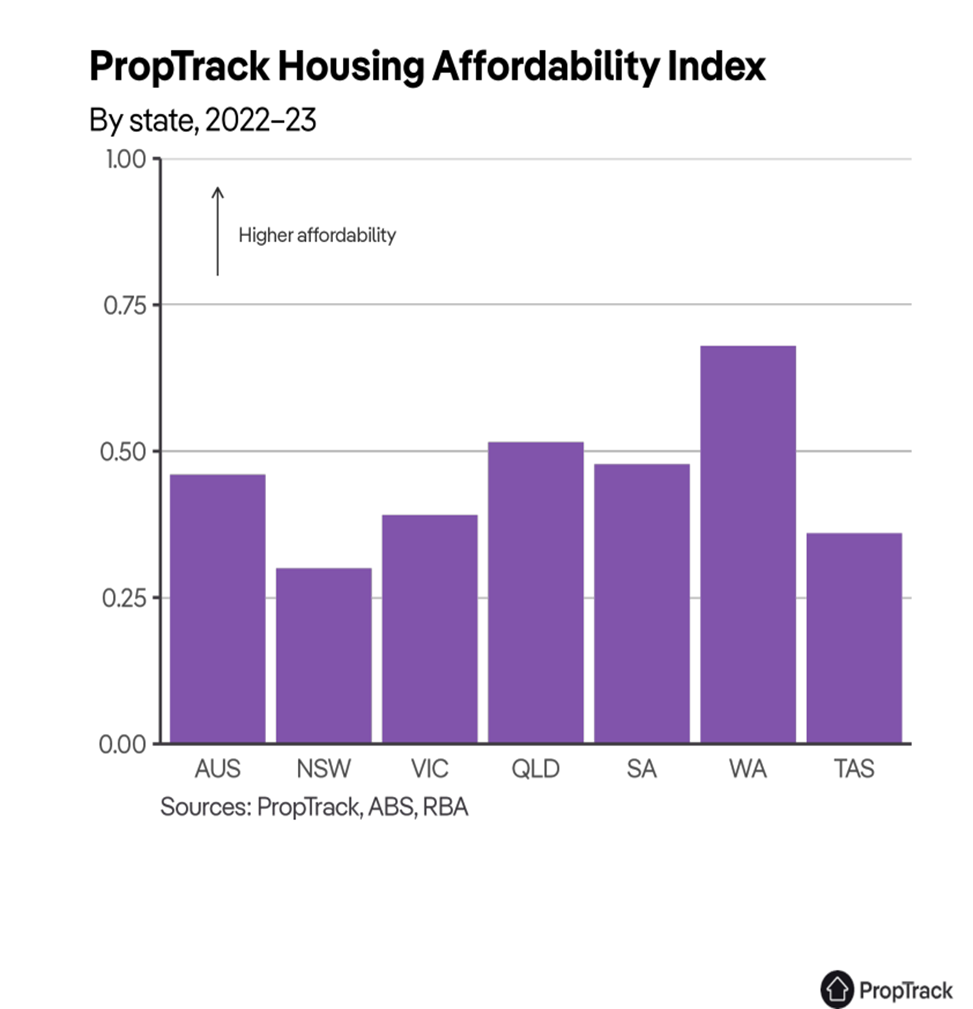
A recent PropTrack Housing Affordability Index 2023 report highlights just how dire affordability is now particularly in NSW, Tasmania, and Victoria, with Perth the most affordable state in Australia.

“That is a marked change from a decade ago, when Western Australia was the least affordable state from 2007-2010 amid the height of the mining investment boom,” the report states.

“[This is] the only time any state has displaced NSW as the least-affordable state.”

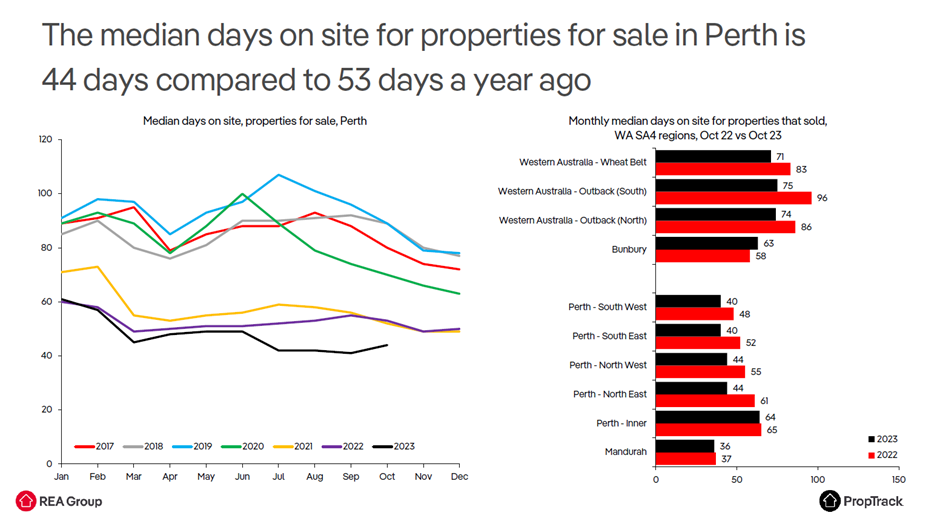
Houses in Perth were sold at a median rate of eight days in October, setting a new record and nearly twice as fast as the 15 days recorded in October 2022, according to the Real Estate Institute of Western Australia.

Warning over lower priced properties

Peter Gavalas, a buyer’s agent from Resolve Property Solutions, (pictured above right) cautioned that fierce buyer competition amid the booming Perth property market could see some buyers settle for low-quality properties that they might one day regret owning.

“The bottom line is that, right now, the Perth property market doesn’t have enough supply to cater to all the demand,” Gavalas said.

“So buyers are reacting the same way they do in any boom – they’re compromising on quality, by settling for less desirable homes, such as ones with structural problems, or less desirable locations, such as on noisy main roads, because they fear they’ll never enter the market any other way.”

Gavalas said even though buyers were experiencing FOMO, it was likely they would suffer a case of buyer’s remorse in the years ahead if they compromised on quality.

“A better option would be to buy a higher-quality property with stronger resale value in a cheaper neighbouring suburb,” Gavalas said.

View the original article on mpamag.com here

Negative gearing isn’t exactly poetry but if it’s properly understood it can at least be music to the ears of property investors.

William Shakespeare may have penned the line “To be, or not to be, that is the question.” For professional accountants, the (arguably) equally profound question we are commonly asked is, “To negative gear or not to negative gear?”

Most investors have a basic understanding of what negative gearing is and how synonymous it is with property investing. This article will expand upon these concepts by discussing positive gearing, non-property investment assets, and the differences between cash flow and tax position.

Positive versus negative gearing

The term “gearing” refers to the use of leverage, otherwise known as a loan, with which to fund an investment acquisition. Interest costs incurred on monies borrowed for investment purposes are tax deductible, so it is often seen as an attractive option in reducing tax.

Negative gearing is, in essence, a tax deduction created due to expenses incurred in owning the investment (with interest costs typically being one of the larger expenses) exceeding the income earned from the investment.

A simple example to illustrate:
$20,000 income received
$25,000 expenses incurred
————————————-
$5,000 negative gearing loss
————————————-

Positive gearing, by contrast, occurs when investment income received exceeds the expenses incurred, with the resulting profit more usually being taxable.

To illustrate:
$25,000 income received
$20,000 expenses incurred
————————————-
$5,000 positive geared profit
————————————-

Why is negative gearing so popular?

The reason negative gearing is so prevalent with property investors is twofold.

First, the sheer cost of buying the property itself would frequently be completely unattainable without a mortgage.

Second, it is to do with the differential between interest rates and rental yield. A bank may charge 6-8 per cent p.a. as the interest rate but the gross rental yield (which is the yearly rent received as a percentage of the property’s market value) may be between 3-5 per cent p.a. and this is before other ownership costs (such as rates, levies, insurance etc.) are factored in, inevitably creating a loss position.

So why then would an investor be happy to lose money via such a strategy?

A key driving force, dare it be said, is taxation. The tax deduction brought on by negative gearing is directly correlated to how much income tax someone needs to pay.

A taxpayer earning above the top marginal tax rate of 47 per cent will therefore save (such as via an additional tax refund) 47 per cent of their negative gearing loss.

To quantify this, a $10,000 negative gearing deduction equates to $4,700 tax saving. By extrapolation, a $50,000 negative gearing deduction will generate $23,500 in income tax savings.

The higher someone’s taxable income, thereby their marginal tax rate, the greater the tax benefit that can be obtained.

The other driving force behind why investors opt to implement a negative gearing strategy is capital appreciation. Put simply, the investor anticipates the investment growing in value.

To illustrate, let’s assume a property investor buys a $500,000 property and sells it 10 years later for $1,000,000. Transaction costs to buy and sell may be $50,000, thereby the investor has made a pre-tax profit of $450,000 (i.e. $1,000,000 – $500,000 – $50,000).

If $10,000 of negative gearing losses arose each year for 10 years, then over the life of the property $100,000 (i.e. $10,000 x 10) of negative gearing losses have been derived. So, a $100,000 “cost” led to a $450,000 profit.

Gearing into non-property investment asset classes

The term “margin loan” is a strategy of being able to leverage, or gear, into shares.

In recent times it has become increasingly common for share investors to utilise their residential mortgage to fund share investments owing to the advantages of lower interest rates as well as removing the risk of margin calls brought about by adverse price volatility.

Investors can either positive or negative gear into shares/managed funds/ETFs and will do so for the same reasons as property, that being to reduce tax and for the investments owned to increase in value.

Certain shares also have the added tax benefit of what is known as franking credits, or imputation credits, which can enhance the investors’ after-tax rate of return.

It is also possible to borrow money at one interest rate and invest it at another. This strategy is colloquially known as “playing the margin”.

To illustrate:
$100,000 invested at 10% p.a. = $10,000 interest income
$100,000 borrowed at 7% p.a. = $7,000 interest expense
————————————-
$3,000 profit
————————————-

There is no (or perhaps very little) capital appreciation when investigating in higher yielding fixed interest type securities, and accordingly this approach to investing will inevitably be positively geared.

Cash flow versus tax

In the world of investing, it is common that there will be differences between what the investor physically receives as income and pays as expenses, compared to the numbers reported within their income tax return.

Of particular relevance when it comes to borrowing money to invest are the mortgage repayments themselves. Loans can be classified as either “interest only” or “principal and interest”.

Principal and interest repayments will be higher due to having to pay down a part of the remaining loan balance with each payment. While the principal component will affect cashflow, it will not affect someone’s tax position, as it is only the interest component that is tax deductible.

Investment in real estate may have added tax deductions such as depreciation and building write-offs. Investments in dividend paying shares may, as stated above, benefit from franking credits.

To be or not to be (leveraged)?

It can certainly be financially advantageous to be able to borrow money to invest. Any decision to use leverage to invest needs to be weighed up carefully against the risks.

Interest rates can and will change. Economies will prosper as well as enter recessions. Wars will break out, pandemics will occur, and changes in economic policy and tax laws by different governments of the day are all inevitable.

The use of leverage to gear into investments most certainly has the potential to improve an investor’s rate of return. But all coins have two sides; an unsuccessful investment can magnify your losses and leave you servicing a loan for many years after the investment has been sold or wound up.

Receiving sound investment advice in addition to quality taxation advice before entering any gearing strategy would be wise.

As Shakespeare’s Sir John Falstaff says in The Merry Wives of Windsor, “Money is a soldier, and will (work) on.”

In 1602, that was his way of saying “money is a good soldier to have in your corner and you should be putting it to work for you.”

It’s probably as true now as it was more than 400 years ago.

Article Q&A

What is negative gearing?

Negative gearing is, in essence, a tax deduction created due to expenses incurred in owning the investment (with interest costs typically being one of the larger expenses) exceeding the income earned from the investment.

What is positive gearing?

Positive gearing, by contrast, occurs when investment income received exceeds the expenses incurred, with the resulting profit more usually being taxable.

Why is negative gearing so popular?

The reason negative gearing is so prevalent with property investors is twofold. First, the sheer cost of buying the property itself would frequently be completely unattainable without a mortgage. Second, it is to do with the differential between interest rates and rental yield.

Should I use leverage to obtain an investment?

The use of leverage to gear into investments most certainly has the potential to improve an investor’s rate of return. But all coins have two sides; an unsuccessful investment can magnify your losses and leave you servicing a loan for many years after the investment has been sold or wound up.

The ‘Great Australian Dream’ of property ownership has spanned hundreds of years. This passion is shared by many foreign nationals who favour our wonderful island for its economic and political stability, high standard of living and an unbeatable lifestyle.


Despite our property markets stellar performance and rise in housing values, there continues to be noise suggesting the Australian property market is due for a collapse.

However, even with genuine concern around interest rate increases and mounting building costs, the property market remains stable with underlying upward price pressure created by local demand and overseas migration.

So, should we remain optimistic the Australian property market will continue to grow, or is this position unsustainable? And, how will Australia’s performance and currency value be impacted by the global economy which remains uncertain and volatile?

Whilst headlines persists predicting global recession, the war in Ukraine, USA debt ceiling extension, upcoming elections, and post Covid recoveries, it certainly makes for one of the most interesting update seminars in recent times.

Watch this free seminar as we discuss:

Australians bemoan their own property taxation burdens but foreign buyers are hit with an array of imposing fees, taxes and surcharges that have somehow not scared them away from Australian real estate.

Interest in Australian property from international buyers continues to soar despite some eye-watering financial obstacles thrown up by the government.

PropTrack’s latest Overseas Search Report – October 2023 revealed that since its July report searches from abroad have continued to increase, with purchase searches up 11.5 per cent in the last three months and rent searches up 7.8 per cent.

Chinese buyers are particularly keen. According to the Foreign Investment Review Board’s latest report, Chinese buyers increased their spending on Australian homes by $1 billion in the past financial year, outlaying a whopping $3.4 billion on Aussie property.

The allure of Australia’s economic stability, rule of law, lifestyle and relative affordability is clearly enough for foreign buyers to overlook, or at least contend with, some staggering financial hurdles placed in their way.

Most Australians bemoaning their own stamp duty and land tax burdens would be surprised at the level of additional taxes and surcharges imposed upon foreign buyers and outraged if they had to cough up even a portion of those sums.

Speaking to API Magazine in Singapore, Ravin Chatlani, Director of Taxation, Australasian Taxation Services, said foreign buyers looking to acquire property in Australia had significant additional costs to factor in that the average Australian would be unaware of.

Fees and taxes for foreign property investors

The fee and charges imposed on foreign buyers could be tens or even hundreds of thousands of dollars more than that incurred by local buyers.

Mr Chatlani said overseas buyers were indeed still hugely interested in foreign property but said the costs involved were a deterrent to many.

The first cost they were up for was the Foreign Investment Review Board (FIRB) fee that amounted to $14,100 for every $1 million of the purchase price.

Then there’s the Foreign Buyers Duty (FBD) that comes on top of the regular stamp duty (and goes under different names in some states). That is levied at 8 per cent of the property price in New South Wales and Victoria and 7 per cent in Western Australia, South Australia and Queensland, and 3 per cent in Tasmania.

Ravin Chatlani, Director of Taxation, Australasian Taxation Services

Ravin Chatlani, Director of Taxation, Australasian Taxation Services

For those foreign buyers still willing to cover those costs, there’s then the Absentee Land Tax Surcharge (ALTS) to place further strain on the budget.

“This varies from state to state but still costs the average international buyer tens of thousands of dollars,” Mr Chatlani said.

“While all land owners pay land tax, this is an additional one specific to overseas buyers.”

This tax is imposed on the land value, and in Queensland is 2 per cent with a tax-free threshold of $350,000, while in New South Wales (no exempt amount) and Victoria it is a more crippling 4 per cent.

This tax is not applied in Western Australia.

As of the start of 2024, Victoria will also be lowering the exemption threshold for all Australian and overseas landlords to just $50,000 from $300,000. The surcharge was 2 per cent for the 2020 to 2023 land tax years, 1.5 per cent for the 2017 to 2019 land tax years, and 0.5 per cent for the 2016 land tax year.

Mr Chatlani described said the added expenses were onerous and described the experience of a Singapore-based buyer.

“He was buying a $1.2 million apartment in Sydney and his land tax bill alone every year was $20,000, plus his strata fees and usual costs.

“The client said that even with the higher rental income, he felt he had nothing left at the end of it.”

But if regular stamp duty, plus the FIRB, FBD and ALTS weren’t spooky enough, there’s also the ghost tax, or vacancy tax as it is more formally known, to overcome.

For properties bought after 9 May 2017, a vacancy fee is applicable if the residential dwelling is not residentially occupied, genuinely available on the rental market, or rented out for six months or more in a 12-month period. The vacancy tax is usually the same as the FIRB application fee paid by investors when submitting a foreign investment application.

Why would any foreigner buy property in Australia?

So why is Australian property still so appealing to foreign buyers?

Mr Chatlani said every buyer had a different reason to purchase in Australia.

“Taking for example Singapore or Hong Kong buyers, with exception of perhaps parts of Sydney, buying in Australia is a smaller outlay.

“A townhouse in Melbourne or Brisbane, or even a house in Perth, for $1 million is a more attractive portfolio option than a small apartment in either of those cities.

“The richer investors from southeast Asia, from China, Taiwan, this is what they look at.

“For the investor in Shanghai where the average apartment price is A$1.5 million, they would gladly buy instead a $900,000 townhouse in Melbourne because it is cheap and they are expanding their property portfolio.”

The financial disincentives through Australian taxes and fees are also prevalent for foreigners in their own local markets.

“Here in Singapore for example, a local buying their second property is subjected to stamp duty of 20 per cent of the purchase price.”

Despite the various additional entry and holding costs, Mr Chatlani still felt the Australian property market was attractive to global investors due to the transparency of the market and stable rule of law that protects all parties within a property transaction.

“The way rental properties are managed in Australia is also very efficient and reliable and provides a complete service.

“Owning an Australian property can be a set and forget proposition.”

He added that education, potential retirement and migration, wealth preservation, relative affordability and potential currency advantages if the Aussie dollar was to rise against their own currency, were all key motivators for foreigners looking at property outside their home country.

Article Q&A

Are foreigners buying more Australian property?

According to the Foreign Investment Review Board’s latest report, Chinese buyers increased their spending on Australian homes by $1 billion in the past financial year, outlaying a whopping 3.4 billion on Aussie property. PropTrack’s latest Overseas Search Report – October 2023 revealed since its July report, searches from abroad have continued to increase, with purchase searches up 11.5 per cent in the last three months.

What extra fees and taxes do foreign property buyers have to pay in Australia?

Among an array of taxes and surcharges overseas buyers of Australian property have to pay, on top of regular stamp duty, are the FIRB, FBD and ALTS and a vacancy tax.

A leading national commentator argues Australia’s seemingly high property prices are a mirage, with the next two years set to deliver rich rewards for local and international real estate investors who take the plunge now.

The head of the company that looks after more Australian landlords than any other accounting firm in the world has argued that despite recent property rises, Australia’s capital cities real estate was still far more affordable than comparable major centres globally.

While the biggest cities Sydney and Melbourne were worthy of buyer attention, it was the smaller state capitals that represented the best investment value for international and local buyers alike.

Speaking in Singapore at the aussieproperty.com Annual Market Update Seminar, Steve Douglas, Chairman of SMATS Group and Managing Director of Australasian Taxation Services and aussieproperty.com, said the idea that Australian property was overpriced was very much an Australian perception.

Citing the price of property per square metre around the world, he said it was clear Australian property had the capacity and conditions to continue rising in value.

“Australians are complaining about property prices but if you look at prices internationally it is incredibly cheap by global standards,” he said.

“Buyers in the likes of Hong Kong and Singapore are realising that living in a small apartment as opposed to a large house in Australia is an overwhelmingly attractive proposition.

“Cities like Perth and Adelaide are less than a quarter the price of Hong Kong and around a third of Singapore’s price per square metre.

“Melbourne and Brisbane aren’t far behind, and even Sydney, which does have far higher median dwelling vales than the rest of the country, is a bargain compared to comparable business hubs like New York, Shanghai, Singapore and Hong Kong.”

Table showing global property prices per square metre.

Mr Douglas agreed with the broader consensus among financial institutions that Australia’s current real estate market recovery had plenty of steam left in it yet.

KPMG’s latest property report on Australia’s capital cities predicted house prices would rise nationally by 4.9 per cent over the next nine months and then surge by 9.4 per cent in the year to June 2025.

Apartment prices across the country were tipped to see an average rise of 3.1 per cent by next June, then a 6 per cent increase in the next 12 months.

But there will be important regional differences, with Perth houses rising the highest – by 8.4 per cent – in the rest of 2024’s financial year (FY) but then Hobart overtaking other cities in FY25 and surging by 14.2 per cent.

Hobart units are also forecast to outperform all other capital cities with rises of 8.7 per cent and 10 per cent respectively over the next two years, followed by Sydney, Melbourne and Adelaide.

Mr Douglas said population growth was the major driver of the national property market.

“I’ve been saying for 30 years that the number one driver of property prices growth is population.

Migration levels graphs

“Three million migrants have come to Australia over the past 11 years and this is one of the key reasons why the country is in fundamentally good economic shape.

“Where this is strategically important is that the quality of migrants is high, comprising young and highly skilled people.

More than half of Australia’s migrant intake is skilled, with the average age being 38.

“Australia doesn’t have to go find tomorrow’s migrants because many of them arrived yesterday as young kids and are now active economic contributors.

“There’s 500,000 of them coming out of university, starting out in the workforce and wanting housing, and that’s on top of the record numbers arriving this year and into the coming years.”

Australian dollar luring overseas buyers

Since January the Australian dollar has slipped from above 71 cents to the US dollar to just 63 cents.

With the exception of a brief but sharp plunge at the onset of Covid, it’s as low as the Aussie has been in ten years and a far cry from the near parity of a decade ago.

But with sound economic fundamentals, Mr Douglas argues the Aussie dollar’s inexplicably low value and the high likelihood it would inevitably rise again, is another major attraction for overseas buyers, particularly from China, who are increasingly turning to Australian property.

“In many countries around Asia, property prices are relatively flat, or like Hong Kong, falling, so Australia’s promise of capital growth is only enhanced when buyers factor in the potential for their Aussie property asset delivering a currency-linked dividend as well.

“Add in interest rates at or near a peak, and I foresee Australian property being in high demand from international and expatriate buyers,” Mr Douglas told the Singapore seminar audience, at which API Magazine was in attendance.

Where should property investors be looking?

National property prices had a 0.8 per cent rise in September as the recovery trend moved through an eighth consecutive month of capital growth.

With the exception of Hobart, every capital city and the nation’s regional property markets all enjoyed strong growth in September.

Adelaide, Brisbane and Perth have been the standout performers over the past quarter but over a year Sydney is up 7.3 per cent and Perth an impressive 8.8 per cent.

Mr Douglas said a case could be made for most of Australia’s capital city property markets.

“If you look at Sydney and Melbourne, there’s 130,000 extra people heading into those population centres and that’s a powerful stimulus for housing demand.

“If you think Aussie property prices are high now, you’ve seen nothing yet; with supply stagnant, prices will rise, mark my words.”

But he saved his biggest praise for the prospects of Brisbane and Perth.

“Brisbane and Perth are going to be the dominant markets for the next couple of years; as much as I love Adelaide it doesn’t have the same population growth but there is limited supply there so I’m satisfied that will also continue to perform almost as well as it has over the past year or so.”

Chronically low vacancy rates around the country are also pushing property prices higher, as renters claw their way into the market to avoid high rents, while investors are returning to markets like Perth’s to capitalise on high rental yields.

National vacancy rates

Vacancy rates table

Source: SQM Research

“I think the property market across the board is going to have a very good 12 months, with Perth probably the standout for investors,” Mr Douglas said.

“There’s a massive, acute undersupply of property and the vacancy rates are nuts!

“I expect plus-five per cent growth and perhaps double-digit growth in Perth and Brisbane.”

The cost pressures on developers were contributing to this lack of supply and price pressure, he said.

“Housing loan commitments are still low, and private residential approvals are still on the decline, why? – because developers are too scared to build because the costs are too high, so if that’s not going to get fixed, where is the supply going to come from?”

“Unless the market is willing to lift the price on new stock by 10, 15, 20 per cent, to allow developers to make decent profits, we are going to have a slow delivery of much-needed stock.”

Article Q&A

Is Australian property expensive compared to the rest of the world?

Speaking in Singapore at the aussieproperty.com Annual Market Update Seminar, Steve Douglas, Chairman of SMATS Group and Managing Director of Australasian Taxation Services and aussieproperty.com, said the idea that Australian property was overpriced was “delusional”. Citing the price of property per square metre around the world, he said it was clear Australian property had the capacity and conditions to continue rising in value.

Where should property investors be looking in 2024?

Speaking in Singapore at the aussieproperty.com Annual Market Update Seminar, Steve Douglas, Chairman of SMATS Group and Managing Director of Australasian Taxation Services and aussieproperty.com, said Brisbane and Perth are going to be the dominant markets for the next couple of years.