
- 25 Sep 2025
- By API Magazine
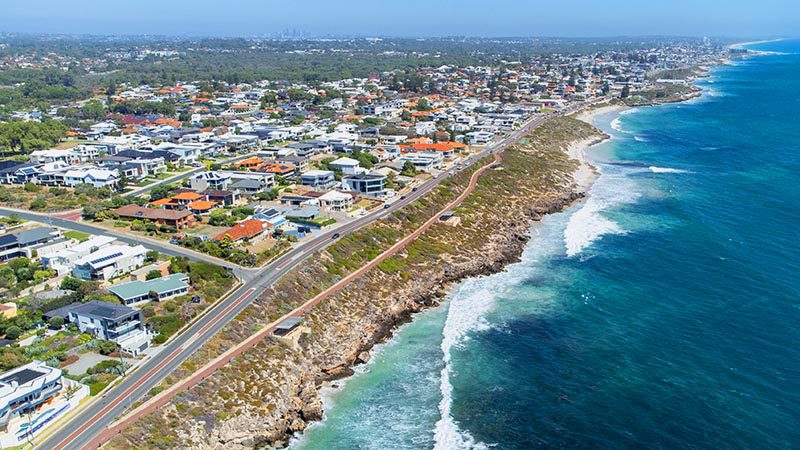
By whatever metric you apply, the Perth property market is on a sustained burst of growth.
Whether it’s the last five years, during which dwelling values have risen by a nation-leading 81.9 per cent, or the latest quarterly data in which it leads the way with capital growth of 3.1 per cent, expectations that the market would stop breaking its own median home price records have proven mislaid.
Towards the end of 2024, the engine room of the Perth real estate market was the outer suburbs.
Back in November, the ten worst performers for house price movements were all inner suburban areas, including Mosman Park’s 7.7 per cent decline and South Perth’s 6.1 per cent house price slide.
The latest data reveals that growth is now more evenly spread.
Outer suburbs are still performing strongly but four of the top ten areas are now closer to the city centre, with South Perth particularly notable for its turnaround, according to Cotality.
 Property prices in SA3 areas (larger than suburb category; source: Cotality)
 Property prices in SA3 areas (larger than suburb category; source: Cotality)
The broadening of the Perth market to one spread more evenly across the city was a trend confirmed by Gabe Hagen, Residential Business Development Manager, Realmark.
“There’s no doubt we’re seeing growth become more evenly spread across Perth, and the numbers tell the story.
“For much of the post-COVID period, the sharpest rent and property price gains were concentrated in outer suburban corridors – places like Baldivis, Rockingham, Wanneroo and Mandurah, where greenfield developments and new estates have been able to deliver stock to meet surging demand.
“Rental bond lodgements in these areas rose by 400 to 1,100 in just 18 months, highlighting how the outer fringe has shouldered the bulk of Perth’s growth.
“What’s changed in the past year is that the inner- and middle-ring suburbs, which had previously been lagging, are now showing renewed momentum.
“The loss of nearly 900 rental bonds in Perth City over the past year has effectively created scarcity right in the heart of the CBD – and scarcity is a key ingredient for future growth.
“This dynamic sets up the inner city for significant upside leading into 2026.
“Even Melville and Belmont–Victoria Park, which have seen steady bond losses, remain attractive for their proximity to employment hubs and lifestyle amenities.
“The combination of falling stock and sustained demand suggests these inner-ring markets will deliver some of the strongest rental and capital growth into 2026,” Mr Hagen told API Magazine.
Top 10 for House Sale Price Growth
| Rank | Suburb | Annual median house sale price (Aug 2025) | Annual price growth (Aug 2025) | 5-Year price growth (Aug 2025) | Median selling days (Jun-Aug 2025) |
|---|---|---|---|---|---|
| 1 | Bateman | $1,303,000 | 37.9% | 72.5% | 20 |
| 2 | Ardross | $1,765,000 | 33.2% | 95.2% | 18 |
| 3 | Madeley | $975,000 | 30.3% | 74.1% | 13 |
| 4 | Trigg | $2,300,000 | 27.8% | 93.3% | 15 |
| 5 | Woodvale | $1,120,000 | 25.4% | 83.2% | 9 |
| 6 | Calista | $600,000 | 25.0% | 131.2% | 12 |
| 7 | Silver Sands | $837,500 | 25.0% | 99.4% | 23 |
| 8 | Woodlands | $1,750,000 | 25.0% | 90.2% | 17 |
| 9 | Aubin Grove | $923,000 | 24.7% | 79.6% | 11 |
| 10 | Midvale | $655,000 | 24.5% | 116.5% | 7 |
Source: REIWA. Filtered for suburbs with a minimum of 28 house sales in the year to August 2025 as at 24 September 2025.
Among the hotspots to watch into 2026, according to Paul Wisby, Sales Representative for Bailey Devine Real Estate, were a basket of inner suburban areas.
“Areas like Mount Lawley, Maylands, Inglewood, Bayswater and South Perth should all do well next year and are good examples of suburbs that blend amenity and lifestyle opportunities with easy access to infrastructure and employment hubs.”
Some signs of market cooling
Western Australia was the only state to record worsening affordability in the past quarter, although it remains the most affordable among the major mainland capitals.
WA also ranks second nationally for investor land loan growth (23 per cent) and new dwelling loan growth (14 per cent).
But elsewhere there are some hints that price growth won’t get out of hand and may even cool.
After three years of breakneck gains, Western Australia’s loan market is catching its breath.
Growth in homebuyer lending was flat at 0 per cent, with 40,760 loans issued.
Western Australia also leads the nation in external refinancing for both owner-occupiers and investors, with annual growth of 9 per cent and 26 per cent respectively.
“WA is a market that’s cooling and consolidating,” Money.com.au’s property expert Debbie Hays said.
“Home owners are choosing to improve their properties and optimise their mortgages, while some investors are still taking on new debt and chasing price growth while they can.
“Investor lending in WA is also subdued, rising 10 per cent to 25,178 loans over the year, below the national average.”
Perth’s median house price now sits at $881, 867, while units are at $624,821.
Top 10 for Unit Sale Price Growth
| Rank | Suburb | Annual median unit sale price (Aug 2025) | Annual price growth (Aug 2025) | 5-Year price growth (Aug 2025) | Median selling days (Jun-Aug 2025) |
|---|---|---|---|---|---|
| 1 | Bicton | $770,000 | 43.9% | 105.3% | 8 |
| 2 | Hamilton Hill | $552,500 | 43.5% | 104.6% | 8 |
| 3 | Doubleview | $721,000 | 42.8% | 80.3% | 7 |
| 4 | Bassendean | $570,000 | 36.7% | 88.1% | 11 |
| 5 | Mount Pleasant | $1,130,000 | 34.5% | 45.0% | 64 |
| 6 | Applecross | $950,000 | 34.1% | 55.7% | 20 |
| 7 | Bentley | $560,000 | 33.3% | 86.7% | 11 |
| 8 | Jolimont | $765,000 | 32.5% | 80.0% | 5 |
| 9 | North Fremantle | $1,140,000 | 30.7% | 50.5% | 13 |
| 10 | Cloverdale | $510,000 | 29.1% | 85.5% | 16 |
Source: REIWA. Filtered for suburbs with a minimum of 28 unit sales in the year to August 2025 as at 24 September 2025.
Unit weekly rents are surprisingly close to those of houses, with the average weekly rent price sitting at $660 for units, just $40 below that for houses. Units are attracting an average rental yield of 5.5 per cent, compared to 4.0 per cent for houses.
Is boom-bust era over?
Julie Kelley, Global Sales and Marketing Manager, aussieproperty.com, said the Perth market had shown signs of breaking away from a boom and bust cycle dictated by the resources sector.
“In the five years that capital growth rates in Perth have outpaced the rest of the country, the iron ore price has fluctuated enormously, peaking around $230-240 per metric ton in mid-2021 before falling to approximately $100 per tonne by mid-2024 and since stabilising in the $100-110 range.
“In that time the city’s property prices have moved upwards independently of mineral price movements, suggesting other factors are now driving the market.

Perth’s property market has massively outperformed the likes of Sydney and Melbourne over the past five years (source: Cotality).
“Perth is attracting new residents based on its great lifestyle and the relative affordability of property compared to other cities.
“WA is the fastest growing state or territory in Australia in terms of population growth, while continued housing supply constraints and high rental demand suggest there’s still room for upward real estate price movement, especially in well-positioned suburbs.”
Asked whether the Perth property market was at its peak, Jennifer Noye, Sales Executive, Edison Property, said it was unlikely to be the case.
“This is a question on everyone’s lips, especially the buyers.
“We expect the market will continue to rise, as we are currently experiencing record low number of listings.
“The government incentives will only bring more buyers to an already heated market, therefore, we believe there is still room to grow.
The growth seems to be in all areas of Perth, both outlying suburbs and inner city.
“Inner city suburbs are all achieving above the sellers’ expectations.
“There is just not enough property available to meet the high demand,” Ms Noye said.
Article Q&A
Which Australian city’s property market has performed best in the last five years?
Whether it’s the last five years, during which dwelling values have risen by a nation-leading 81.9 per cent, or the latest quarterly data in which it leads the way with capital growth of 3.1 per cent, expectations that the market would stop breaking its own median home price records have proven mislaid.
Where are property prices rising fastest in Perth?
Towards the end of 2024, the engine room of the Perth real estate market was the outer suburbs. Back in November, the ten worst performers for house price movements were all inner suburban areas, including Mosman Park’s 7.7 per cent decline and South Perth’s 6.1 per cent house price slide. The latest data reveals that growth is now more evenly spread. Outer suburbs are still performing strongly but four of the top ten areas are now closer to the city centre, with South Perth particularly notable for its turnaround.
What is the median property price in Perth?
Perth’s median house price now sits at $881, 867, while units are at $624,821.
How much does rent cost in Perth?
Unit weekly rents are surprisingly close to those of houses, with the average weekly rent price sitting at $660 for units, just $40 below that for houses. Units are attracting an average rental yield of 5.5 per cent, compared to 4.0 per cent for houses.