
- 25 Nov 2025
- By API Magazine
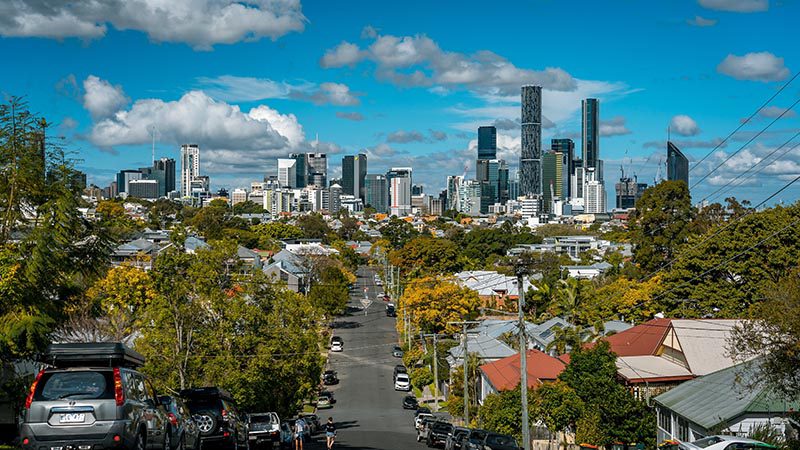
Anything priced below $1 million is hot property in Brisbane.
Analysis of the 10 best and worst performing suburbs over the past year in Brisbane highlights the continued huge demand for units and for houses priced below the city’s median dwelling value of $992,864.
Only two suburbs recorded an annual house value gain of more than 20 per cent, while all ten of the top unit performers did so (as highlighted in the four tables below, provided exclusively to API Magazine by Cotality).
The unit sector has outperformed houses since the beginning of 2024.
Top 10 capital growth performers – Units
| Suburb | Median value | 12 month change | 5 year change |
|---|---|---|---|
| Caboolture | $543,696 | 25.1% | 117.1% |
| Hillcrest | $568,451 | 23.8% | 150.2% |
| Goodna | $551,297 | 22.7% | 146.5% |
| Bowen Hills | $681,855 | 21.6% | 63.1% |
| Marsden | $713,697 | 20.8% | 120.1% |
| Kippa-Ring | $624,093 | 20.8% | 99.3% |
| Burpengary | $608,202 | 20.6% | 119.0% |
| Newstead | $946,769 | 20.5% | 62.3% |
| Dinmore | $576,876 | 20.3% | 120.5% |
| Kooralbyn | $380,225 | 20.1% | 138.1% |
Cotality Research Director, Tim Lawless, told API Magazine that Brisbane’s housing value growth trends have been skewed towards the lower quartile and broad ‘middle’ of the market where price points are more aligned with household incomes and borrowing capacity.
“Over the past 12 months, lower quartile house values have recorded a 13 per cent rise while upper quartile values are up a smaller 7.9 per cent.
“A similar trend can be seen across the unit sector where lower quartile values are up 17.6 per cent over the past year and upper quartile values are 12.2 per cent higher.
“Given Brisbane dwelling values have surged 82.5 per cent higher over the past five years, housing affordability has gone from being far healthier than the national average to a market where housing affordability is now stretched, tracking above the national average since mid-2024,” Mr Lawless said.
Top 10 capital growth performers – Houses
| Suburb | Median value | 12 month change | 5 year change |
|---|---|---|---|
| Chermside | $1,202,155 | 21.1% | 79.0% |
| Lamb Island | $515,718 | 20.0% | 82.7% |
| Samford Village | $1,488,468 | 19.8% | 92.0% |
| Churchill | $720,583 | 18.9% | 129.5% |
| Chermside West | $1,218,521 | 17.5% | 87.2% |
| Basin Pocket | $669,726 | 17.3% | 119.0% |
| Ferny Grove | $1,236,942 | 17.2% | 93.8% |
| Mansfield | $1,375,000 | 17.1% | 92.6% |
| Macleay Island | $558,167 | 17.0% | 84.3% |
| Beachmere | $880,126 | 16.9% | 71.8% |
Median apartment prices in the Queensland capital are now the second highest nationally, after Sydney, while median house prices rank third after Sydney and Canberra.
The Brisbane real estate market’s sustained price growth raises the question of whether an affordability limit will be reached soon to slow it down.
That appears unlikely, according to Will Silk, Residential Research Lead, JLL Australia.
“The Brisbane property market has recorded exceptional price and rental growth over the past three years and continues to display strong quarterly gains among Australia’s capitals.
“Ongoing supply constraints, driven by labour shortages and major infrastructure works, are likely to keep upward pressure on housing.
“While affordability challenges may exclude some buyers, this often redirects demand into the rental market, attracting investors and sustaining prices.
“Overall, unaffordability alone is unlikely to materially dampen Brisbane’s market in the short term.”
The weakest markets for house value growth all have a median value that is above the Greater Brisbane benchmark of $1.09 million.
Lowest 10 capital growth performers – Houses
| Suburb | Median value | 12 month change | 5 year change |
|---|---|---|---|
| Albion | $1,143,427 | -8.8% | 34.9% |
| Wooloowin | $1,566,598 | -5.0% | 68.8% |
| Anstead | $1,618,459 | -3.7% | 63.9% |
| Hamilton | $2,310,105 | -2.2% | 40.1% |
| Greenslopes | $1,322,908 | -2.1% | 63.4% |
| St Lucia | $1,873,672 | -1.7% | 60.3% |
| Chelmer | $1,685,702 | -0.4% | 53.8% |
| Sherwood | $1,550,147 | 0.8% | 67.4% |
| Fig Tree Pocket | $1,925,754 | 1.0% | 52.6% |
| Lutwyche | $1,467,713 | 1.5% | 60.5% |
Continued high demand for those lower priced properties appeared more likely than overall price containment.
“As prices continue to rise, buyer activity naturally gravitates toward more affordable segments of the market and in Brisbane, this has been reflected in greater demand for smaller homes and apartments,” Mr Silk told API Magazine.
“Expanded federal first home buyer assistance will likely add further demand pressure in these segments.
“Given these factors, growth in Brisbane’s lower and middle price tiers is expected to continue into 2026, maintaining their leadership in overall market performance.”
George Kafantaris, Managing Director, CBS Property Group, said unit performance is likely to remain solid in the short term.
“Affordability challenges, strong investor interest and reinvigorated demand for well-located medium-density housing continues to support the sector, particularly near transport, universities and major employment hubs.
Mr Lawless, however, questioned whether the pace of growth could continue.
“It’s fair to say the pace of growth is likely to prove unsustainable.
“Further rate cuts are looking less certain and housing affordability and loan serviceability factors will eventually see the growth trend start to ease.”
Lowest 10 capital growth performers – Units
| Suburb | Median value | 12 month change | 5 year change |
|---|---|---|---|
| Oxley | $698,491 | 3.7% | 72.6% |
| Park Ridge | $821,092 | 4.4% | 97.3% |
| Wynnum West | $742,373 | 4.8% | 67.1% |
| Raceview | $496,178 | 4.9% | 74.3% |
| Norman Park | $906,576 | 6.0% | 79.1% |
| Manly | $880,738 | 6.1% | 54.3% |
| Hawthorne | $924,081 | 6.1% | 78.0% |
| Everton Hills | $890,156 | 6.9% | 79.8% |
| Logan Reserve | $801,383 | 7.3% | 97.8% |
| Richlands | $686,507 | 7.8% | 82.9% |
Brisbane’s 2026 hotspots
Even if capital growth levels out in 2026, there’s the near-certainty that many suburbs will outperform the wider market and deliver high double-digit growth.
Mr Kafantaris identified seven suburbs he believed would be bright spots in the city next year. They were:
Chermside: A major activity centre with strong amenity, transport access and ongoing densification. Unit yields remain attractive and rental demand is consistently high.
Nundah: Offers excellent connectivity (rail and airport), strong rental demand and low vacancy rates. A historically stable suburb with continued appeal for both investors and young professionals.
Tarragindi: An established, tightly held, family-oriented suburb with limited new supply. It has character homes, good school catchments and steady demand to support long-term growth.
Springwood: A more affordable option with strong growth outlook, improved infrastructure links and amenity upgrades. Appeals to both homeowners and investors seeking value.
Moorooka: Still one of the more affordable inner-south locations with genuine gentrification momentum. Improving transport and lifestyle options provide long-term upside. Flood mapping checks are recommended.
Paddington: A premium, low-supply, character-rich suburb with exceptional lifestyle appeal. Strong demand from professionals and families supports ongoing capital growth.
Oxley: Well-connected via rail and major roads, with improving amenity and comparatively affordable entry prices. Solid choice for long-term investors, though flood risk should always be checked.
Mr Silk said many Brisbane suburbs remained attractive to investors and owner-occupiers, particularly those offering strong connectivity to the central city, established amenities, or lifestyle appeal.
“Inner-city areas and well-serviced middle-ring suburbs generally maintain strong value through market cycles.
“Locations close to transport, employment centres and schools continue to appeal as the city’s population and infrastructure network expand.”
Article Q&A
Why are Brisbane homes under $1 million in such strong demand?
Properties priced below the city’s median dwelling value attract the widest pool of buyers, align better with borrowing capacity, and offer more attainable entry points. This segment continues to record the strongest growth across both houses and units.
Are Brisbane units outperforming houses in 2024–25?
Yes. Unit values have risen faster than house values, with all of the top-performing unit suburbs recording annual gains above 20 per cent. Lower purchase prices, strong rental demand and affordability pressures are drawing more buyers into the unit market.
Is Brisbane’s property boom likely to slow down soon?
Analysts say affordability pressures may eventually temper growth, but ongoing supply shortages, population increases and infrastructure works are expected to keep upward pressure on prices in the short term.
Which Brisbane suburbs are expected to be hotspots in 2026?
Property experts highlight Chermside, Nundah, Tarragindi, Springwood, Moorooka, Paddington and Oxley as likely outperformers in 2026 due to their amenity, connectivity, lifestyle appeal and relative affordability.